Posts

Lent 4- The prodigal sons and the forgiving Father

Image
Joshua 5:9-12; Psalm 32; 2 Corinthians 5:16-21; Luke 15:1-3, 11-32 The parable of the Prodigal Son begins with a simple request, "Father, give me my share of the estate.” To us, it seems like the sort of request a spoiled child might make. But, there is a lot more in that request than we realize. In Jesus’ culture, for a son to ask for his inheritance before his father died is almost unimaginably disrespectful. It is an incredible insult. Kenneth Bailey spent a good deal of his life trying to understand the Bible by studying the cultures of the Middle East and the Mediterranean. He says this, "For over 15 years I have been asking people of all walks of life from Morocco to India and from Turkey to the Sudan about the implications of a son's request for his inheritance while the father is still living. The answer has always been emphatically the same... the conversations run as follows: 'Has anyone ever made such a request in your village?' 'Never!' 'C...

Lent 3- Let's bear fruit... while we still have time- Luke 13v1-9

Image
  Isaiah 55:1-9; Psalm 63:1-8; 1 Corinthians 10:1-13; Luke 13:1-9 In our Gospel reading, someone starts speaking about something brutal that Pontius Pilate, the Roman Governor, did. Pilate was not a nice person, and his leadership used a heavy iron fist to remind the people that Rome was in charge. The event described seems to have been an attack by Pilate on some Galilean pilgrims. Galileans were known for being troublemakers and had participated in rebellions before. It sounds like while some of these pilgrims were offering sacrifices in the Temple, Pilate killed them, and their blood then mixed with the blood of their sacrificed animals. It was a common belief in Jesus’ day that if something particularly awful happened to someone it was because they were particularly sinful. They had done something bad and they received a terrible punishment in return. … This is not unlike what you encounter in cultures that believe in karma. If something bad happens to them then they are, i...

Short meditation on John 8:12 for Holden Prayer

Image
  Again Jesus spoke to them, saying, ‘I am the light of the world. Whoever follows me will never walk in darkness but will have the light of life.’   ~John 8:12 Jesus is speaking these words during the Festival of Booths. This was the biggest festival of the three major festivals during the time of Jesus. It was originally a harvest festival, but it came to have a number of other elements as well. The people would set up booths, or huts, to remember the Hebrews living in the wilderness after they were rescued from slavery in Egypt. … Light was also an important part of this festival. People would dance and sing in the temple courtyards with torches. Four huge menorahs were lit and placed in the court of the women. It was said the light was sufficient to illuminate all Jerusalem. In Isaiah, Israel is described as “a light to the nations” (42:6) that [the Lord’s] “salvation may reach to the ends of the earth” (49:6). Isaiah encourages the people “Arise, shine; for your ligh...

Lent 2- Our Citizenship is in Heaven

Image
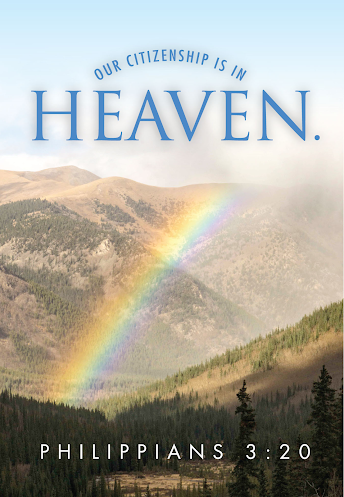
  Genesis 15:1-12, 17-18;  Psalm 27;  Philippians 3:17-4:1;  Luke 13:31-35 In Paul’s letter to the Philippians he writes, “our citizenship is in heaven” (3:20). When most people hear this, they are thinking about going to heaven when they die. … I don’t think that is entirely untrue, but that’s not primarily what Paul is saying here. What Paul is referring to is identity. What identity drives you? What is the core of who you are? What sets your priorities? The city of Philippi changed dramatically about 100 years before Paul wrote this letter. There was a great battle during the Roman Civil war. And the two victorious generals were left with a large army that was too dangerous to bring back to Rome, so they gave them land and created a Roman colony in northern Greece. This is Philippi. Philippi in Paul’s time was largely made up of the descendants of these soldiers. They lived in Greece, but they identified primarily as Roman citizens. They were very proud of being ...

Lent 1- Jesus is tempted in the wilderness

Image
  Deuteronomy 26:1-11;  Psalm 91:1-2, 9-16; Romans 10:8b-13; Luke 4:1-13 The orthodox theologian Alexander Schmemann once said,  “We live as if [Christ] never came. This is the only real sin, the sin of all sins, the bottomless sadness and tragedy of our nominal Christianity” (Great Lent).  Lent is about looking at our lives and reminding ourselves that Jesus has come, and so we seek to returning to a way of life that acts like it. We re-evaluate our desires. We look at our fears. We ask the hard questions. Why do I want that? Will that really make me happy? Am I desiring the right things? Why is that bothering me? Why have I put my foot in my mouth again? … We ask ourselves about the state of our hearts, because our treasure will be there (Matt 6:21). In the early church people who were preparing to be baptized on Easter spent time in intense spiritual preparation. It was a time of prayer, fasting, study, generosity, service, and renunciation of sin, as they prep...

Transfiguration- Last Sunday after Epiphany

Image
Exodus 34:29-35; Psalm 99; 2 Corinthians 3:12-4:2; Luke 9:28-43 Today we have reached the end of the season of Epiphany. “Epiphany” comes from a Greek word meaning something like “manifestation”. Many medieval calendars used the Greek name “Theophany” for this season, which means ‘manifestation of God’. This season is about how God was made manifest in the person of Jesus. … The season is bookended by two major events. The first is the visit of the Magi to Jesus and his parents, and the last is the Transfiguration of Jesus before his Apostles on the mountain. … Right before our Gospel reading today Jesus asks his disciples the question, “Who do the crowds say that I am?” And they report back the rumours that have been circulating, “John the Baptist, but some say Elijah; and others say that one of the old prophets has risen again” (Lk 9:18-20). Jesus then turns and asks them a more important question. His second question is not about what people say, but what they say as h...

Love my enemies? Luke 6

Image
  Genesis 45:3-11, 15; Psalm 37:1-11, 39-40; 1 Corinthians 15:35-38, 42-50; Luke 6:27-38 At the moment, our society is full of opportunities for conflict. … Some see the truckers’ protest as a heroic stand to release the country from increasingly unnecessary government mandates, while others see it as an expression of systemic white supremacy. … Some see every interaction within our society as being marked by subtle racist, sexist, ableist, and other kinds of xenophobic powerplays that create a hierarchy of the privileged and oppressed. Others balk at the suggestion that things are so bad as an expression of ingratitude for the technology, medicine, and democracy that we all enjoy. They ask us to consider what time and place we would rather live in- where would we find more prosperity and justice. … Some express the need to move to greener technologies to lessen the destructive human footprint on the planet, and others speak about supporting jobs in the oilfield as a way of creatin...